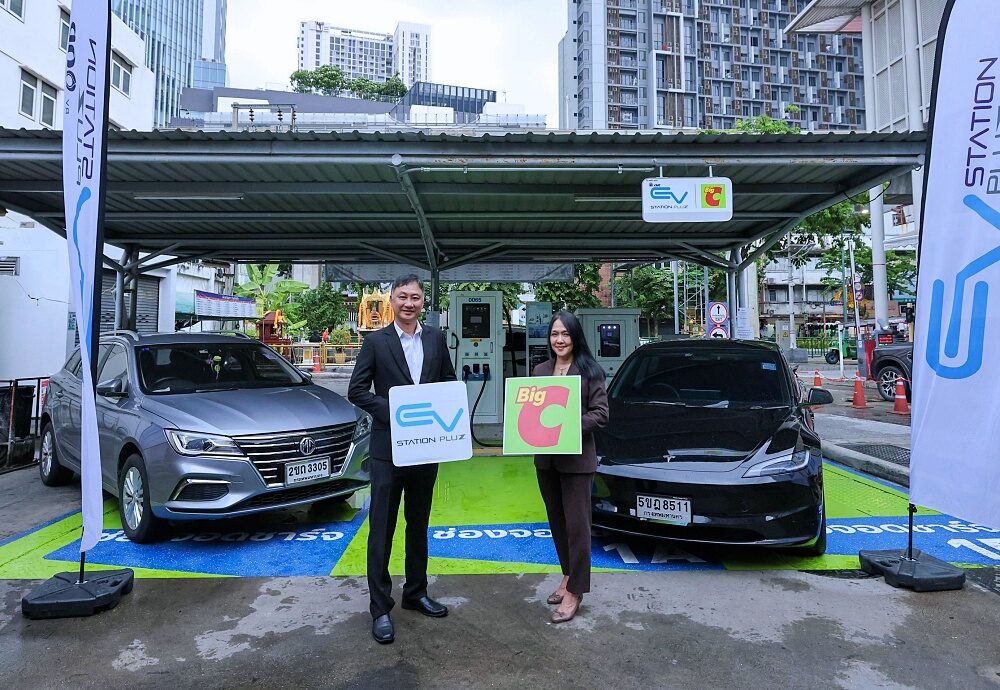
PTT Oil and Retail Business Public Company Limited, or OR, and Big C Supercenter Public Company Limited have announced a key milestone for Thailand EV infrastructure. EV Station PluZ charging stations are now available inside 80 Big C locations nationwide, supporting the charge-and-shop lifestyle as Thailand electric vehicle adoption continues to grow.
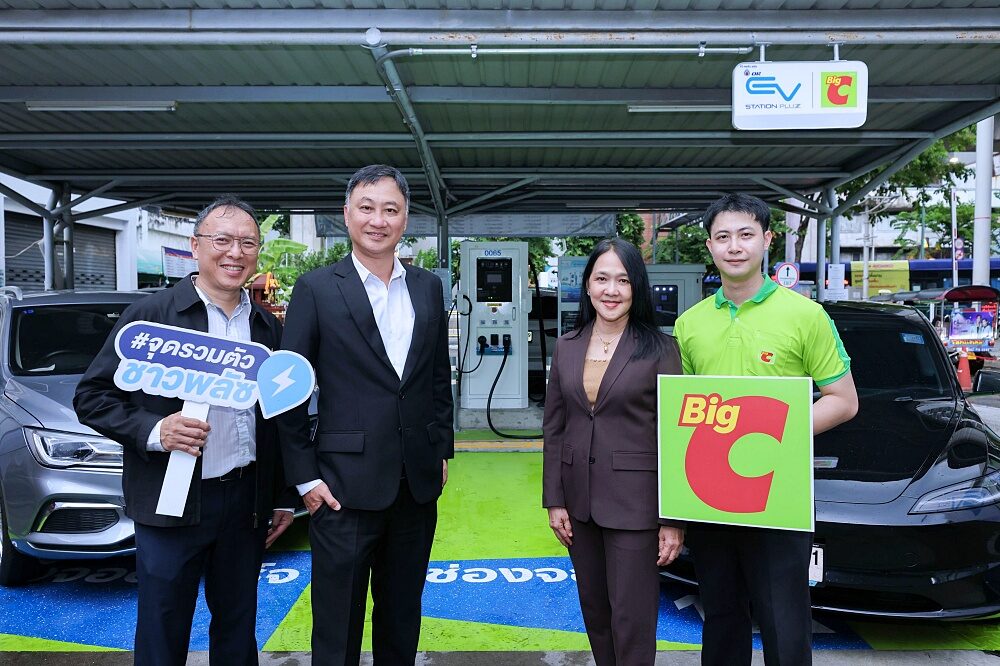
80 EV Station PluZ sites inside Big C
The strategic partnership between the energy and retail groups began rolling out charging locations in 2023 and has now reached its first-phase target of 80 Big C sites across Thailand.
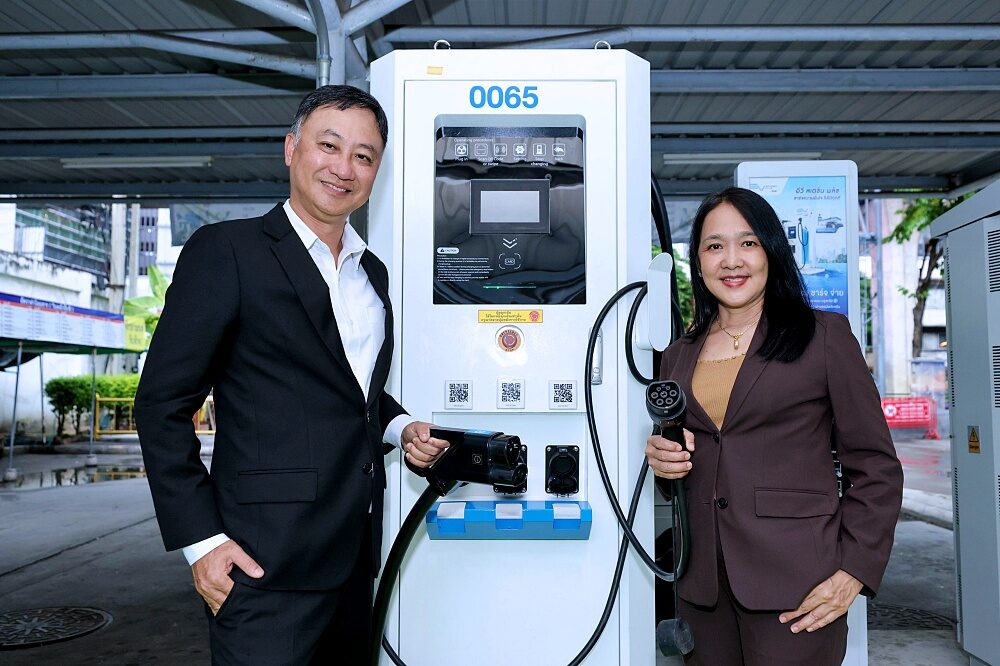
The network focuses on DC quick chargers rated from 40 kW to 180 kW, adjusted for customer behavior and the physical conditions of each Big C branch. The aim is to let customers manage their charging time conveniently while they shop, dine or spend time in the store.
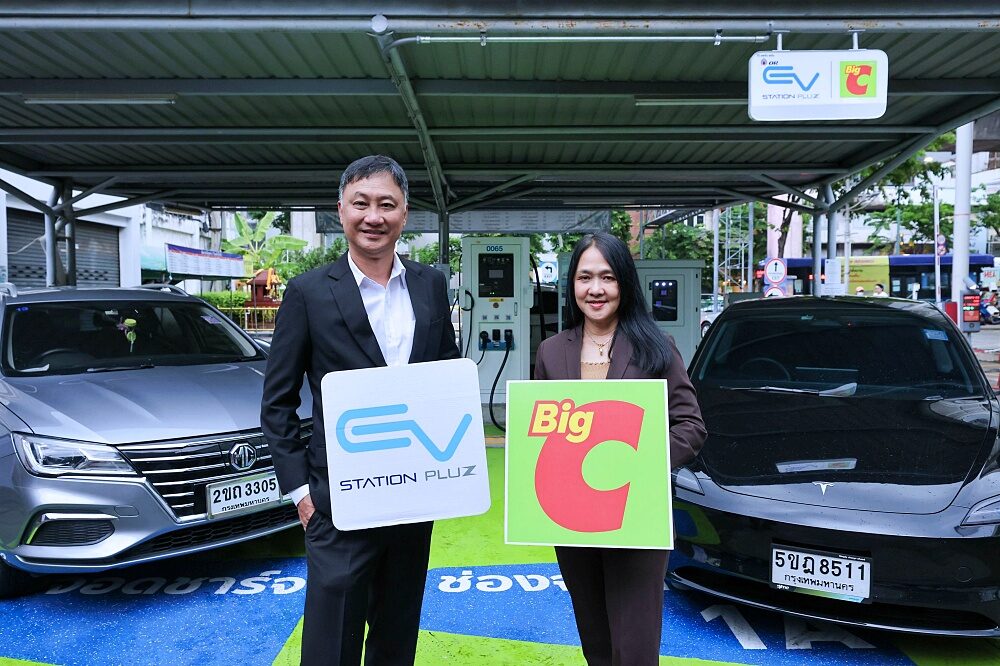
App-based charging, booking and payment
EV drivers can use the EV Station PluZ application to search for charging sites, reserve a queue, start or stop charging, make payment and collect blueplus+ points. The app also supports push notifications when charging is close to completion, making the shopping-center use case more practical.
That notification layer is especially important for retail charging because users can walk away from the vehicle without losing track of charging status or overstaying the charging bay unintentionally.
Roadmap to 120 sites and Bangkok EV HUBs
OR and Big C plan to expand EV Station PluZ locations to 120 sites by the end of 2026. The partners are also preparing an EV HUB model in Bangkok, aimed at high-demand urban charging areas.
Each EV HUB is expected to feature high-power charging above 180 kW and at least six DC CCS2 charging connectors, helping reduce bottlenecks in dense areas before the network moves toward the longer-term goal of covering every Big C branch nationwide by 2027.
As of April 2026, the EV Station PluZ network covers all 77 provinces in Thailand with more than 1,350 locations across PTT Station sites and major hypermarket locations.
Bangkok Motorhaus Perspective
The OR and Big C deal is a strong location-based strategy. Many Big C branches sit near community centers or important travel corridors, so adding 40-180 kW charging makes practical sense for the average hypermarket dwell time of roughly 45 minutes to 1.5 hours.
That window is often enough to bring an EV battery from around 30% to 80%, while the driver spends time shopping or dining instead of waiting inside the vehicle at a roadside charging stop. Big C also benefits from extra customer traffic created by EV charging demand.
The challenge will be site management. Retail charging bays often face two issues: non-charging cars occupying EV spaces, and EVs that have already finished charging but remain parked while the owner is still shopping. If OR and Big C can pair stronger app-based idle fees or smart barriers with stable transformer and load-management systems for multi-car charging, this network could become a powerful advantage over competing retail charging locations.