
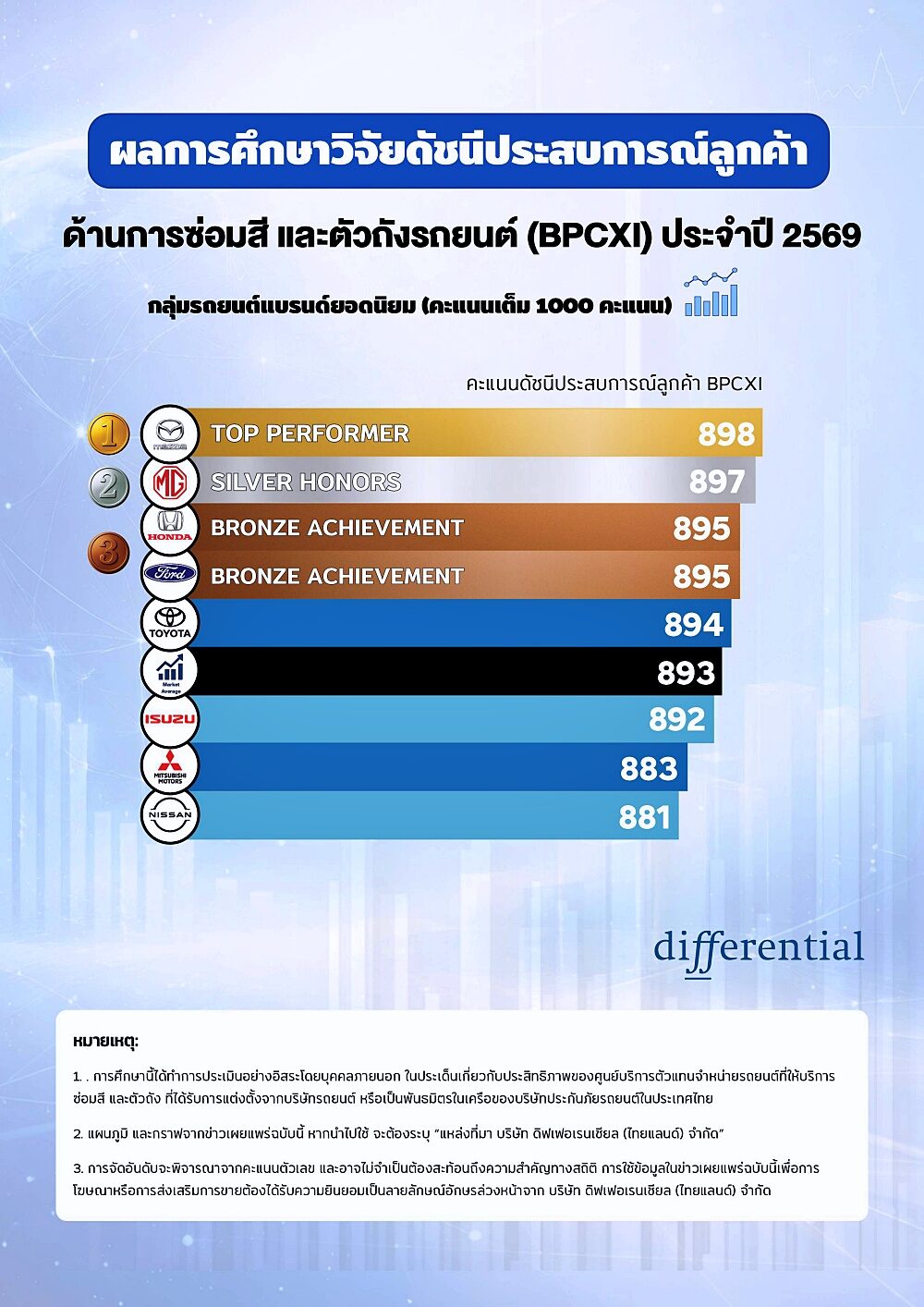
Differential (Thailand) Co., Ltd., a marketing research and consultancy company, has released its 2026 Body and Paint Customer Experience Index, or BPCXI, for Thailand. The study found that the overall industry score declined for the first time since the research began.
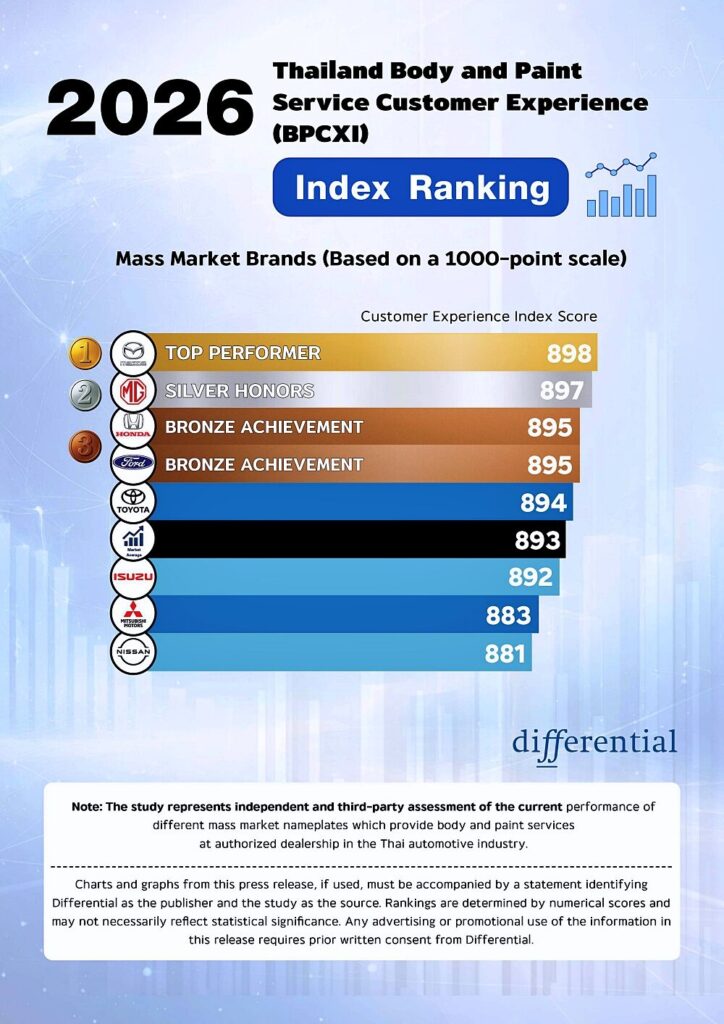
The industry score dropped by 7 points, from 900 points in 2025 to 893 points in 2026. The result points to renewed pressure on aftersales operations, especially body and paint repair experiences.
Workmanship and communication remain key issues
Siras Satraphai, Managing Director of Differential Thailand, said the main causes of lower satisfaction are basic repair experience issues, including service quality, on-time delivery and clear communication.
In particular, workmanship quality and the quality of reassembling parts are areas where automakers and service centers should place the highest priority if they want to reverse the trend.

Mazda ranks first in BPCXI 2026
In the 2026 BPCXI ranking for body and paint customer satisfaction, Mazda ranked first with an overall score of 898 points. Mazda scored highest in service quality and timeliness.
The Thailand BPCXI 2026 study collected responses from 1,552 new-vehicle owners who had body and paint repairs at authorized automaker service centers within 12 months after the repair.
Five assessment factors
- Service quality
- Timeliness
- Personnel and facilities
- Communication and transparency
- Convenience of service access
Differential noted that aftersales service, especially body and paint repair, is a critical moment in the long-term relationship between customers and brands. Post-service follow-up can directly influence repeat service and future brand repurchase decisions.
Bangkok Motorhaus Perspective
The first overall decline in Thailand body and paint customer experience is an important market signal. Consumers now evaluate aftersales service almost as seriously as the vehicle itself.
Mazda score of 898 points shows that investment in basic execution still matters: skilled workmanship, accurate part reassembly and disciplined delivery timing remain core drivers of customer confidence and brand loyalty.
The larger point is that customers do not see repair work as a one-time transaction. They see it as part of the relationship with the brand, which makes communication during the repair and follow-up after the service increasingly important.
If automakers neglect these basics, the effect can extend beyond post-repair dissatisfaction and influence the next purchase decision. The lower index score creates an opening for brands that seriously improve aftersales quality to stand apart.