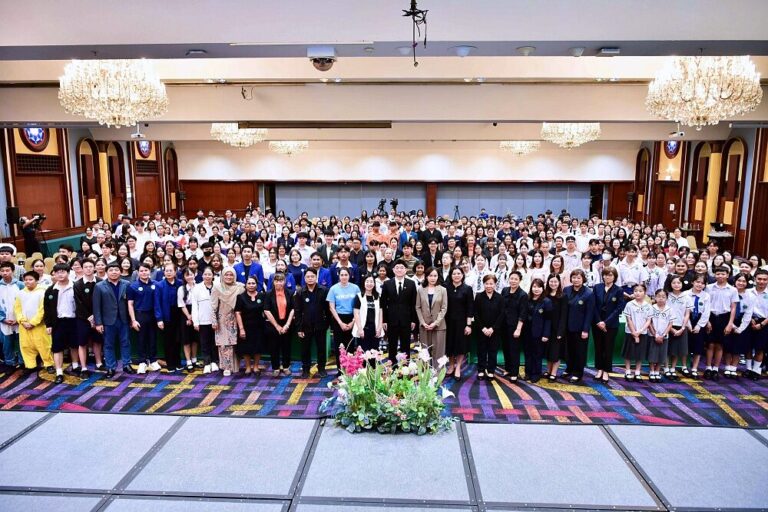
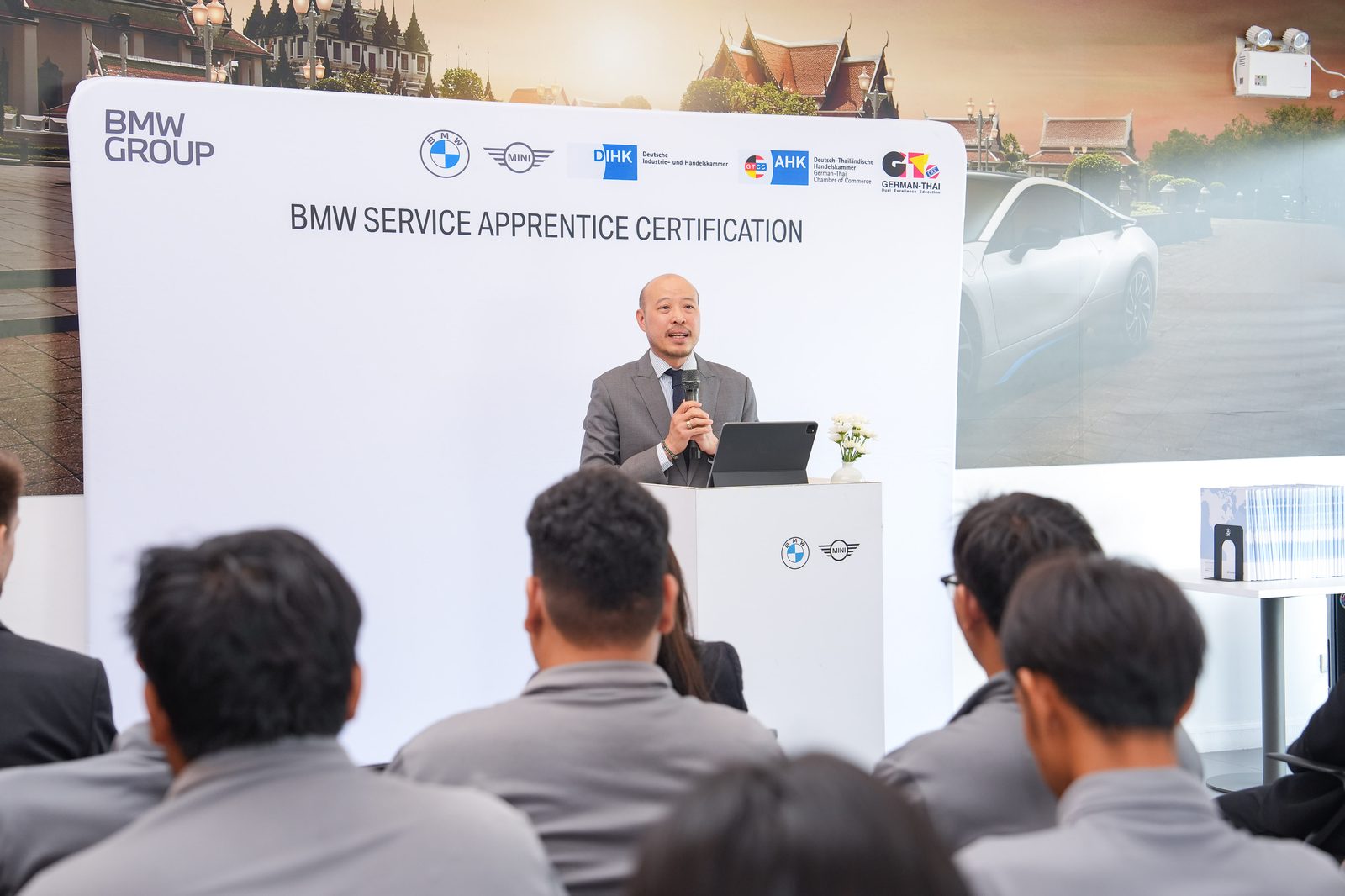
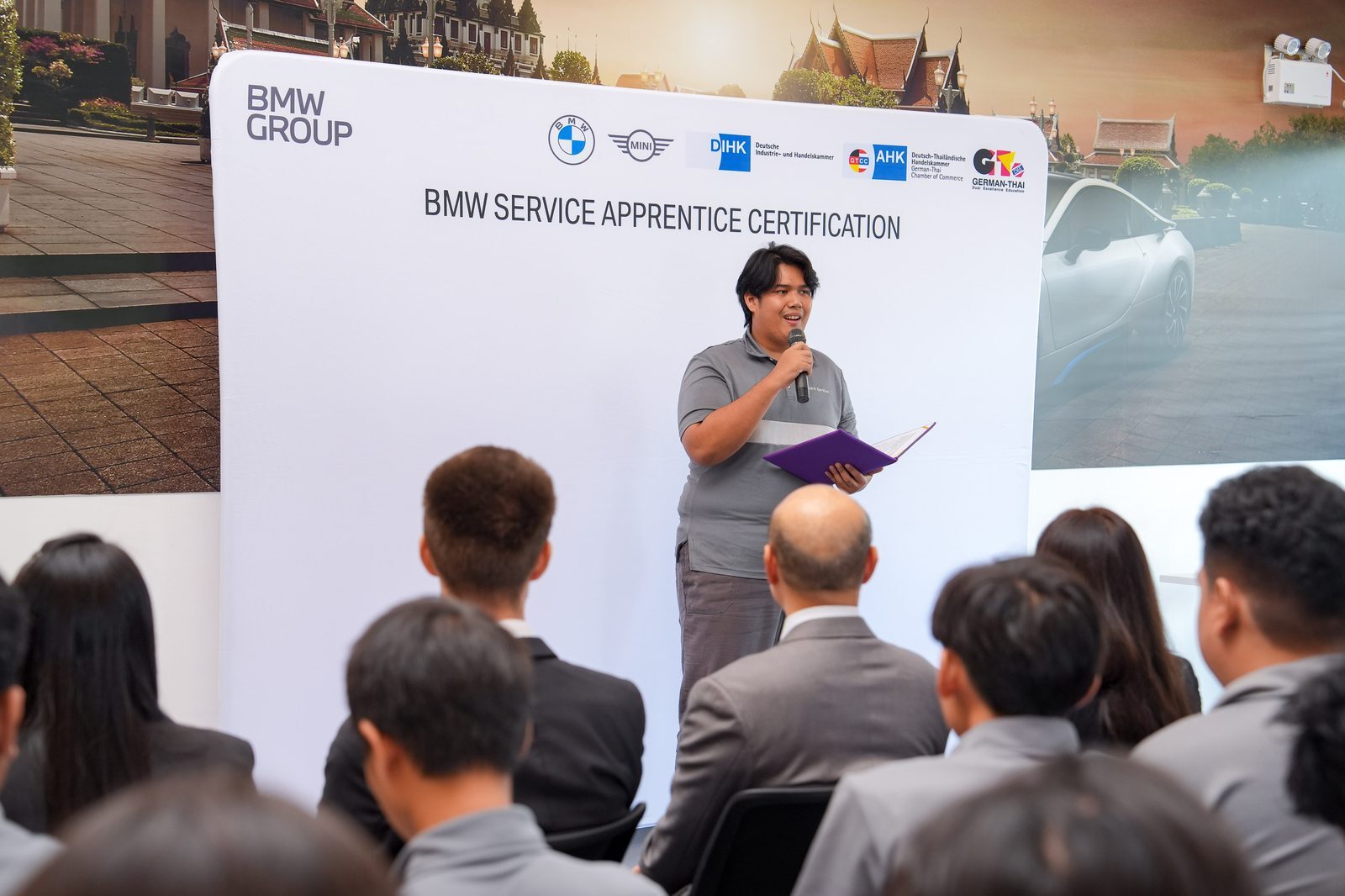
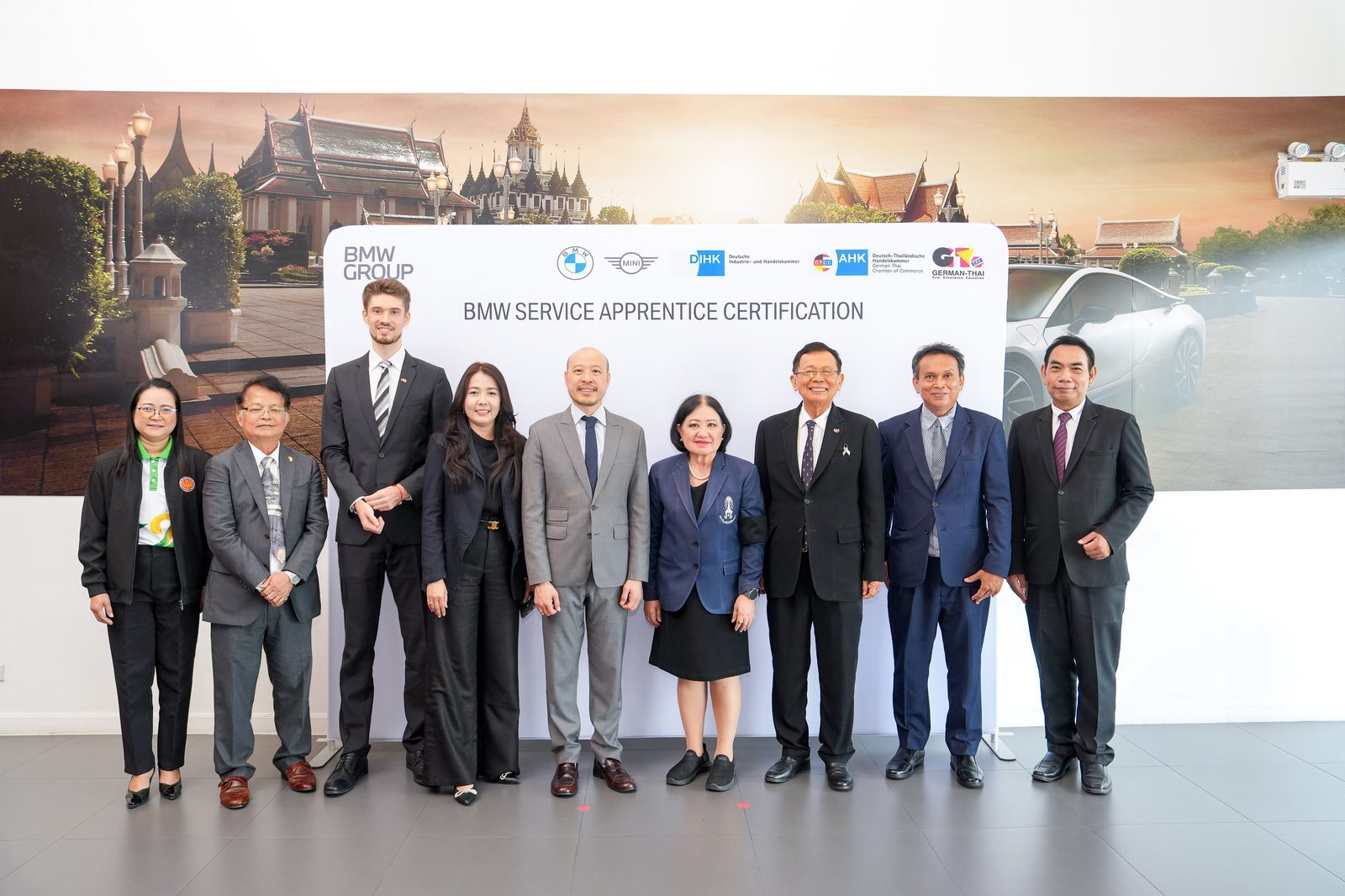
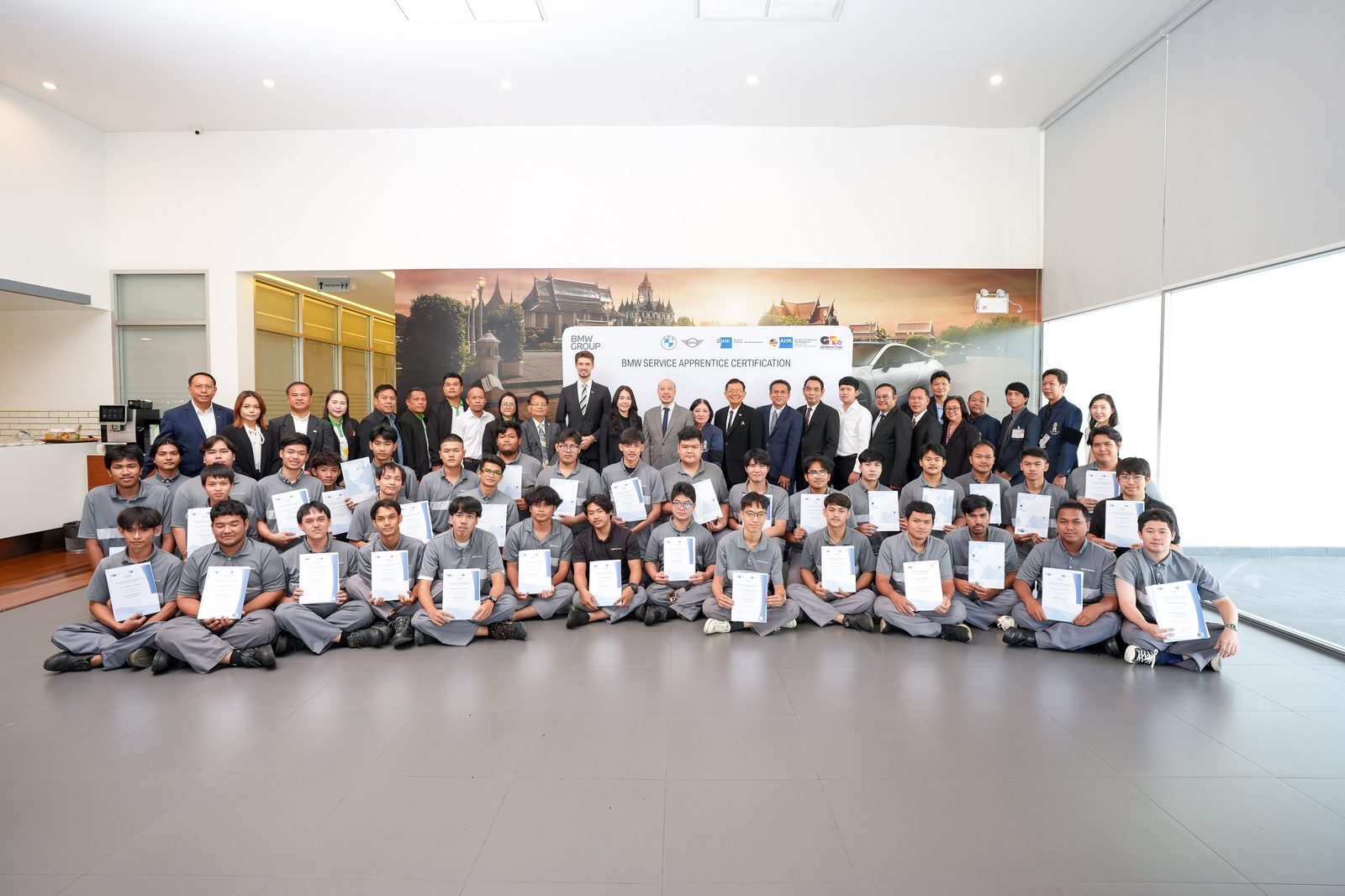
BMW Group Thailand reinforced its vision for developing automotive personnel capabilities by holding a certificate presentation ceremony for graduates of the BMW Service Apprentice program for 2023 (12th cohort) and 2024 (13th cohort) at the BMW Group Thailand Training Center. The program aims to elevate Thai vocational labor with mechatronics and modern automotive expertise according to international standards, preparing them to support the sustainable growth of the electric vehicle (EV) industry and future digital technologies. High-level executives from government, private sectors, and partner educational institutions joined to congratulate the graduates.
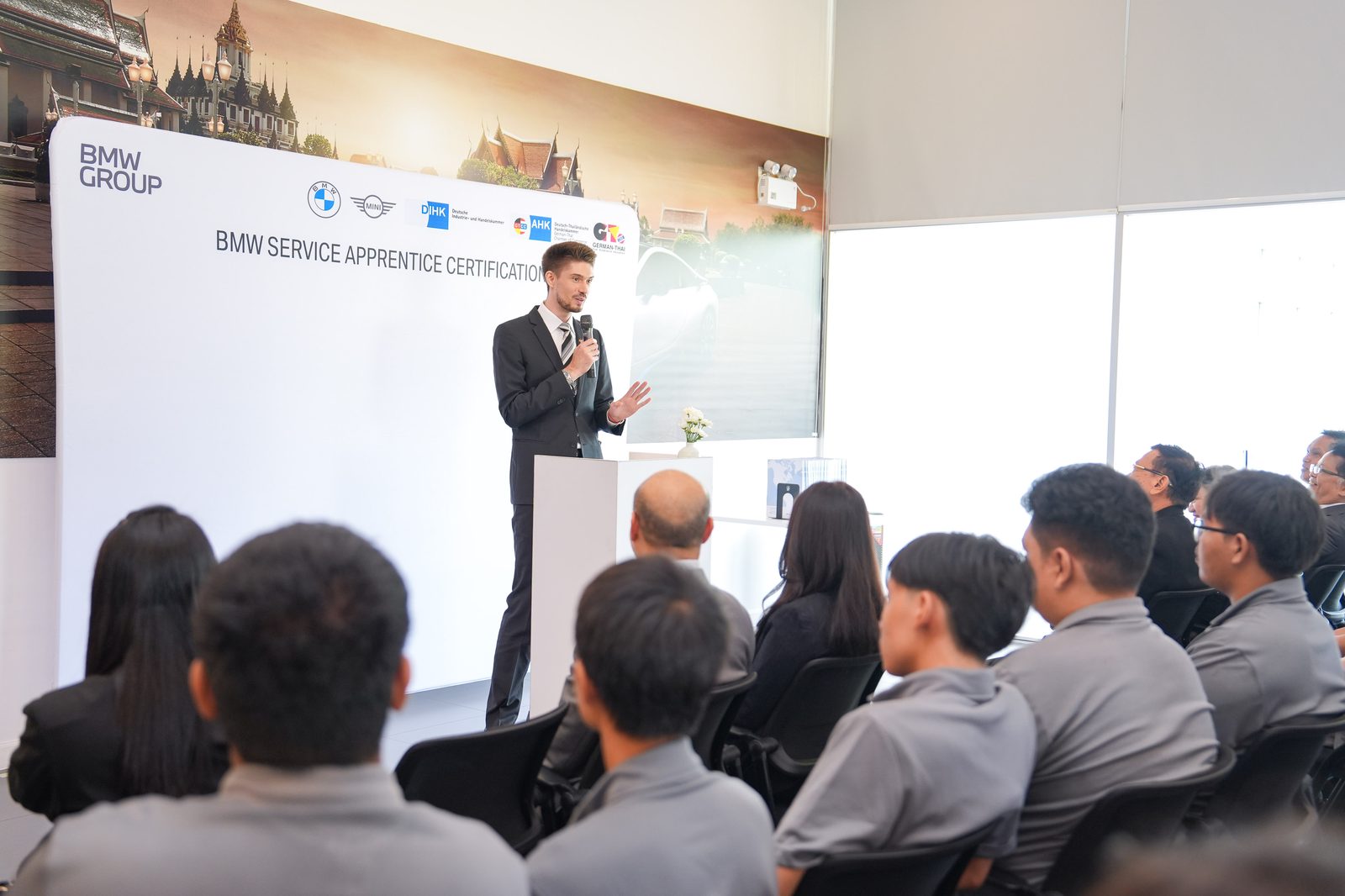
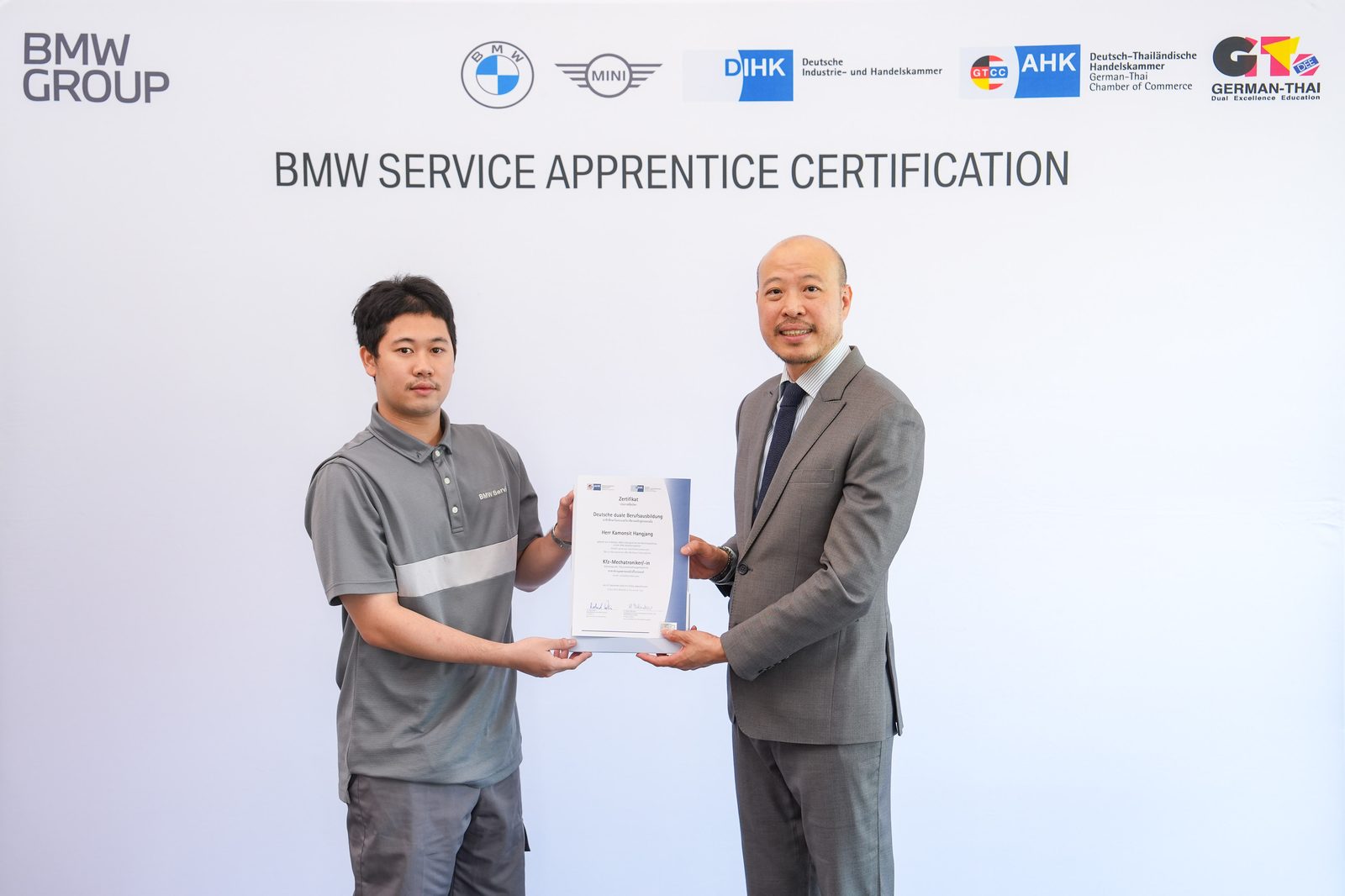
German-standard Dual Vocational Training System Structure
This project was initiated in 2012, aligning with the government's policy to promote Thailand as a regional hub for research and development in environmentally friendly automotive industries. It is structured as a dual study and training program (Dual System) under the collaboration between BMW Group Thailand, its authorized dealer network, and the German-Thai Chamber of Commerce (GTCC) through the German-Thai Dual Education and Professional Development (GTDEE) program, as well as leading vocational institutions. The curriculum integrates knowledge of mechatronics and automotive technology, offering students the opportunity to learn theoretical principles in educational institutions alongside practical training with expert technicians.
Project Benefits and Success Statistics
The BMW Service Apprentice 2026 automotive technician program spans a total of two years of study and training. It systematically manages the quality of life and career path of its students to ensure stability in their profession.
- Students receive scholarships, a termly allowance, and appropriate adjustments to their daily wages throughout the course.
- Graduates will receive an A-Level certification (DIHK Standard Level A), an internationally recognized standard accredited by the Association of German Chambers of Commerce and Industry.
- Guaranteed employment opportunities as permanent staff at BMW service centers nationwide immediately upon graduation.
- To date, the program has awarded scholarships and developed 309 skilled technicians for the Thai automotive industry. Currently, 49 students from the 14th and 15th cohorts are undergoing their studies and practical training.
- Past statistics show that 76% of graduates remain and grow within the BMW dealer network.
How Bangkok Motorhaus views it
BMW's continuous drive to develop professional personnel highlights a long-term strategy for laying the foundation of its supply chain in terms of human capital, a factor no less important than product competition or price wars. In the current climate, with Thailand's electric vehicle (EV) market rapidly expanding, a major challenge many brands, especially new players, often face is the readiness of service centers and technicians who understand high-voltage electrical systems, as well as complex mechatronics systems. By establishing its own technician production system based on Germany's DIHK standard, BMW creates a structural advantage in after-sales service, helping to maintain premium standards and build consumer confidence in long-term vehicle use.
A notable highlight from the statistical data is the high employee retention rate of 76%, reflecting that the benefits, income structure, and career paths offered by the brand effectively attract and retain skilled labor within the system. This mitigates labor shortages in an era of industrial transformation. However, a crucial point for future consideration is the speed at which curriculum knowledge is updated to support next-generation automotive technology, evolving from mechanical vehicles to Software-Defined Vehicles and more sophisticated autonomous driving systems. If BMW can continuously integrate software skills and advanced energy management systems with its traditional engineering craftsmanship standards, this project will remain a crucial core in firmly maintaining competitive capabilities in the luxury car market.